


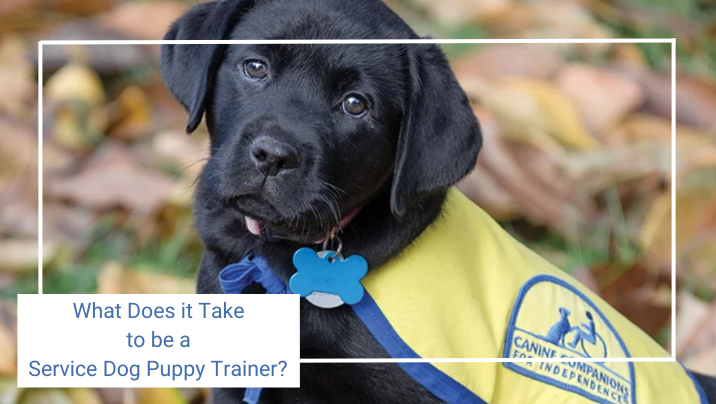
Have you wanted the pleasure of having a dog, but not the long-term commitment? September is National Guide Dog Month, and volunteers are always needed either to train a puppy for 8 weeks or a year, or to be a service dog puppy sitter on call when volunteer trainers need coverage. No prior experience necessary. There is ample direction and support on how to teach a puppy good house behavior, toileting, basic commands, obedience and socialization. Agencies supply the 2 month-old puppy (generally a Labrador or Golden Retriever or a mix of both), the puppy’s equipment (collar, leash, crate, toys…) and some even provide the food and a kennel. They also take care of all the dog’s veterinary needs. The term is generally a year, then the puppy goes on to formal training by experts.
If you haven’t raised a dog before, you can start out being a puppy sitter to familiarize yourself with the care and attention they need. If you prefer an even shorter term of service, you can volunteer to have a puppy for the first 8 weeks to teach good manners which is a great help for volunteers who work full time so they get a 5 month-old puppy who knows the basics. You can even co-parent, having the dog for part of the week and the puppy goes to another handler for the rest of the week. Guide Dogs for the Blind started in 1942, and has 180 clubs in 10 western states (including Arizona) that provide local support. There also is a local program, Power Paws Assistance Dogs you may want to check out as well.
The commitment involves taking classes on how to train a service guide dog prior to starting (can be online videos), and twice a month meetings. One needs to be with the puppy all day and follow protocol on the commands to teach: sit, wait, stay, come, that’s enough (of play), go to bed, let’s go, and how to reward (with their kibble). They need to learn to leave things on the floor, stay calm when someone is at the door or in the bustle of activity and noises (like a car horn). They have protocol on what games to play with the dog to entertain and burn energy. One needs to teach them that if they are wearing their “at work” vest, they can only relieve themselves on command. They also need to learn to ignore a command given to them if it means the person will not be safe if they follow through. One needs to socialize the puppy with outings at least twice a month to places like the bank, the grocery store, mall, park, restaurants, work, sports/entertainment events, local festivals, the airport, Church, and the like. They need to learn to stay “on the job,” ignore distractions and keep focus on keeping their human safe.
The hardest part can be returning the dog to the organization for training and placement, even though you know you were a temporary custodian helping to develop the dog’s skills. The dogs that graduate will be companions for people with incurable conditions who need support and are provided free to their owner so they can have more independence and a better quality of life. They will be placed to assist those who are visually impaired, hearing impaired, mobility impaired, those with epilepsy, diabetes, autism, Downs Syndrome, Veterans or those suffering PTSD. You can find out what happened to your puppy, and where is their home (which can be anywhere in the U.S. or Canada). If a dog doesn’t have the skills needed to be a good service dog, they may do other work such as being therapy dogs visiting those in institutions to bring cheer. The agencies promise to find a safe home and good care for life.
Intrigued by the thought of making such an impact on someone’s life by training a puppy, but still not sure? There was an award-winning documentary made that followed 5 puppies training to be a guide dog, you can watch the trailer for, Pick of the Litter here, and perhaps you will want to watch the film!
A generous person will prosper; whoever refreshes others will be refreshed. Proverbs 11: 25
KIBS/IBS Award Winning Home Products









 SINCE 1979