


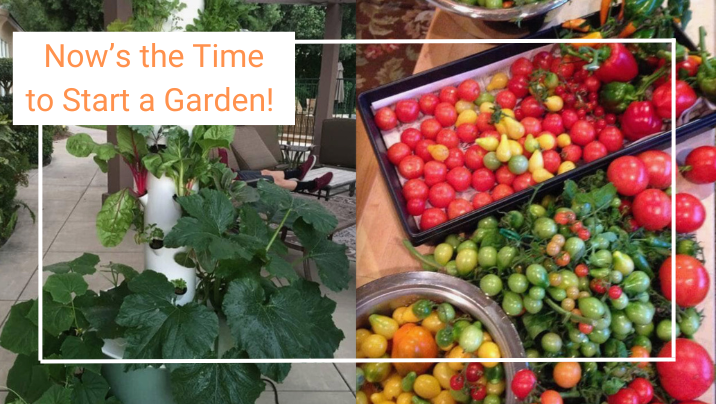
As people tire of the rising cost of produce and the declining quality and availability, more people are considering growing their own food. Arizona supplies plenty of sun and a long growing season so one can have a bountiful supply of ongoing produce to harvest. The best part, you can avoid that most of our stores are now selling food secretly coated (including organic labelled) with a clear toxic coating to artificially extend shelf life to boost profits—but if it kills bacteria and discourages bugs, what kind of harm will it do to our delicate microbiome in our gut? What are the consequences of the toxins accumulating in our body? No one yet knows. (Tip: Natural Grocers has a policy to not allow any of the fresh fruits and vegetables to have that coating). Besides, since each day after harvest all plants are losing more nutrition, and if it is older than it appears because of the coating, you’ll be sacrificing the nutrition and taste.
Gardens provide the perk of food accessibility steps from the kitchen. It gets us into the care of nature, as we create beauty and a better environment, and enjoy the flavor and full nutrition of just picked food. It’s a means of being more self-sufficient and people report feeling more calm gardening. People find harvesting fulfilling and rewarding. Studies have found gardening is also good for brain health both for its stimulation and mood elevation. Another important bonus: people eat more vegetables if they grow them!
My husband and I enjoy being a hybrid urban farmer. We have raised beds for our root vegetables and sprawling plants like melons, squash and mint, and we have aeroponic vertical gardens* (including one indoors to grow out of season plants) because they take up less space, yield greater harvests, require little care (no weeding), and are less susceptible to extreme heat or cold. In the summer we add ice or frozen bottles to the water tank to beat the heat and if there is a frost, we just roll our vertical garden under the patio to protect it, while we hustle to cover the plants in the raised beds. Traditional planting takes more work having to amend soil, set up irrigation, requires continual weeding, with a risk inconsistent production, and has more exposure to critters and bugs that hide in the dirt.
Studies have shown growing the following plants are most cost effective for saving money on groceries: tomatoes, squash, leaf lettuce, green beans, herbs, okra, cucumbers and kale. One can realize even more savings in their vertical garden because one can plant earlier and grow later in the season, and with the ideal water delivery, they provide a greater yield. I do tell others, grow the following plants in the vertical garden only because they are known to pull the heavy metals from the soil into the plant: kale, arugula, strawberries, celery and tomatoes. Another benefit to having a vertical garden system for busy people, the unit lasts some 25 years and is a plug and play system making it easy to have success.
And this is the confidence that we have toward Him, that if we ask anything according to His will, He hears us. 1 John 5: 14
Quinoa Tabbouleh with Pomegranate Seeds
What Does it Take to be a Service Dog Puppy Trainer?
KIBS/IBS Award Winning Home Products
* This is an affiliate link. If you purchase through my link, I receive a small commission and you will get my support,, but it will not affect your purchase price. I only recommend what I have researched, love and what I use and recommend to all my friends.









 SINCE 1979